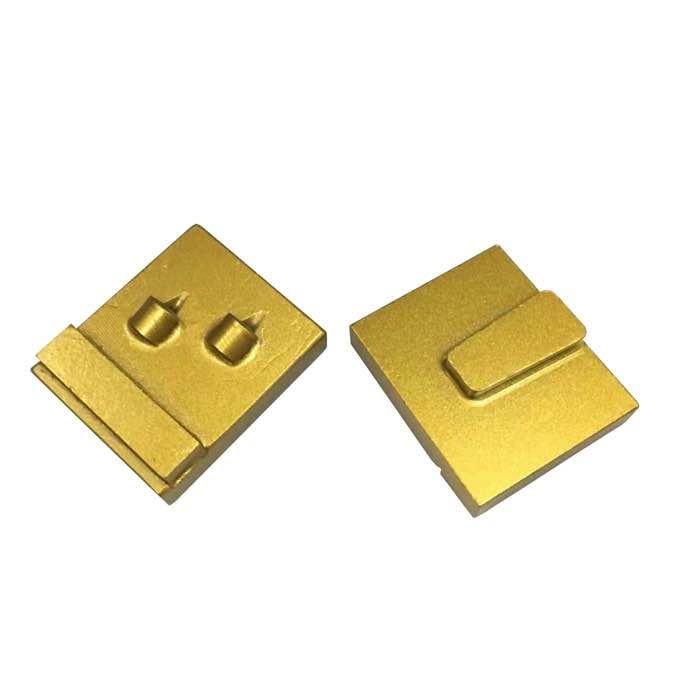
Category: GRINDING SOLUTIONS
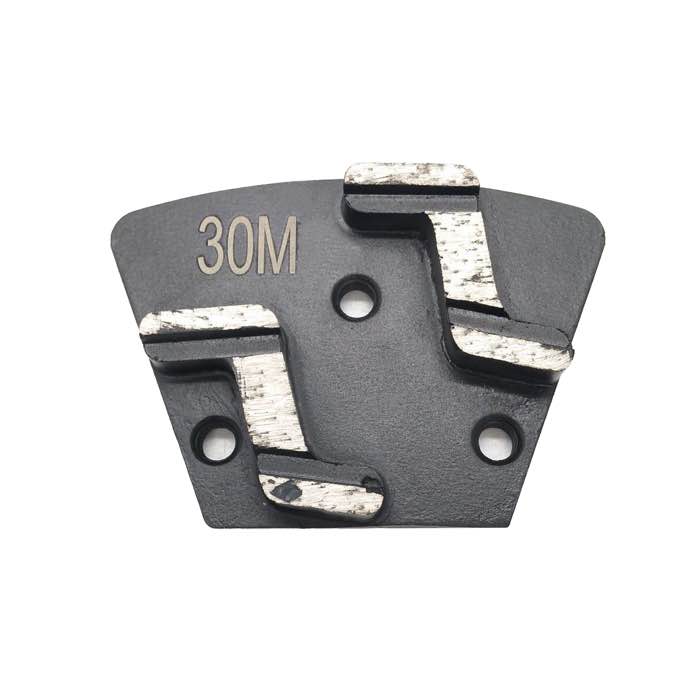
PCD Number: 2
PCD Size: 1/4
Segment: 1
Color: Golden (Can be customized)
Diamond grinding tools are industrial abrasives that use industrial-grade diamond particles bonded in a metal matrix to grind, level, and prepare concrete, stone, and other hard surfaces. Unlike traditional sanding discs that wear down quickly, diamond grinding segments expose fresh diamond crystals continuously as the bond wears, delivering consistent cutting performance throughout the entire segment life. These tools are the industry standard for concrete floor preparation, coating removal, and surface leveling in commercial, industrial, and residential construction projects.
| Bond Type | Metal-bonded (sintered) |
| Diamond Grit | 16# – 120# (custom available) |
| Segment Height | 8mm – 15mm standard |
| Working Surface | Concrete, mortar, screed, epoxy coating |
| Machine Compatibility | HTC, Husqvarna, Scanmaskin, Lavina & more |
| Use Condition | Wet or dry grinding |
Test floor hardness with a Mohs scratch test kit — soft concrete (Mohs 3–4) requires hard bond, hard concrete (Mohs 6–7) requires soft bond
Select grit size based on the task: 16–30# for heavy coating removal, 40–60# for general grinding, 80–120# for fine finishing
Match segment count to machine size — 3-head machines use 3 segments per plate, larger machines may use 6 or 9
Choose quick-change style (Redi-Lock, HTC twist) for your specific grinder brand to ensure proper fit
The metal matrix hardness that controls how quickly diamond crystals expose. Soft bond wears fast for hard materials; hard bond wears slow for soft materials.
The particle size of diamond crystals, measured in mesh (#). Lower numbers = coarser grit = faster removal but rougher finish.
The usable wear length of the diamond segment. Taller segments (10–15mm) provide longer service life than standard 8mm segments.
The density of diamond particles per unit volume in the segment. Higher concentration = smoother finish but slower cutting; lower concentration = faster cutting but shorter life.
Use soft bond for hard concrete (to expose diamonds faster) and hard bond for soft/abrasive concrete (to slow segment wear). Test the floor with a Mohs scratch kit first, or send us a sample for a free bond recommendation.
A standard metal-bond segment can grind 300–800 m² depending on concrete hardness, grit size, and machine pressure. Finer grits and harder floors generally yield longer life. Premium 15mm segments can exceed 1,000 m².
Yes. We offer quick-change adapters compatible with HTC, Husqvarna Redi-Lock, Scanmaskin, Lavina, and other major floor grinder systems. Specify your machine model when ordering.
Wet grinding reduces dust, extends segment life by 30–50%, and produces a smoother finish, but requires water management. Dry grinding is faster and more convenient for small areas or when water is unavailable, but requires HEPA dust extraction.
Replace segments when the remaining diamond layer is less than 2mm, when cutting speed drops significantly despite proper bond selection, or if any segment shows cracks, looseness, or uneven wear.
No. Always use the same grit size across all segments on a machine. Mixing grits causes uneven floor scratching and premature wear of the coarser segments.
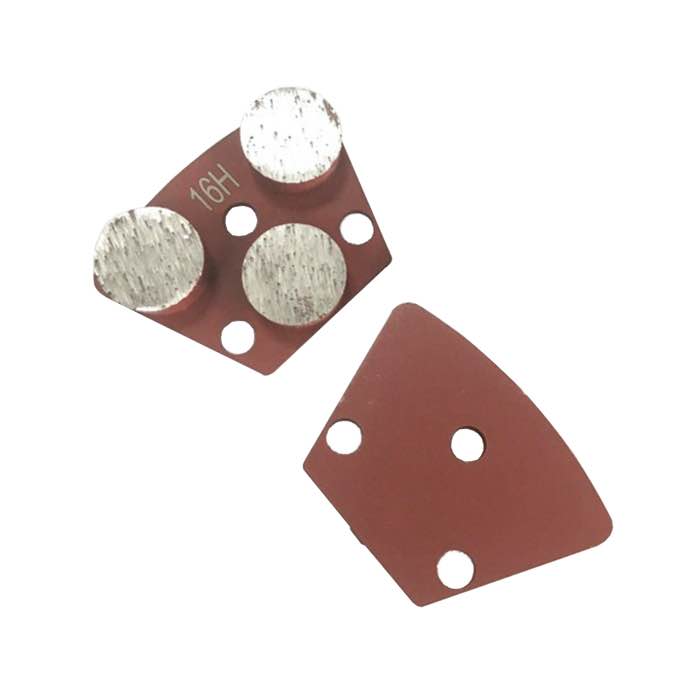
View details
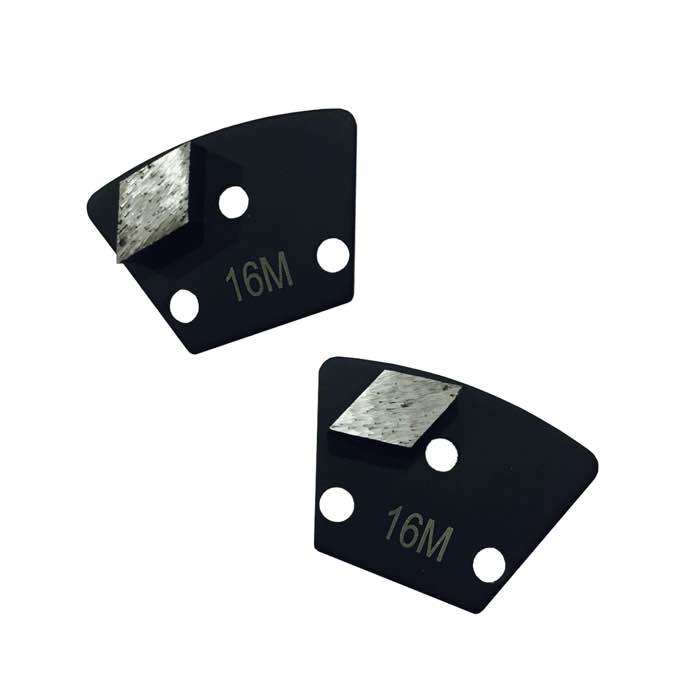
View details
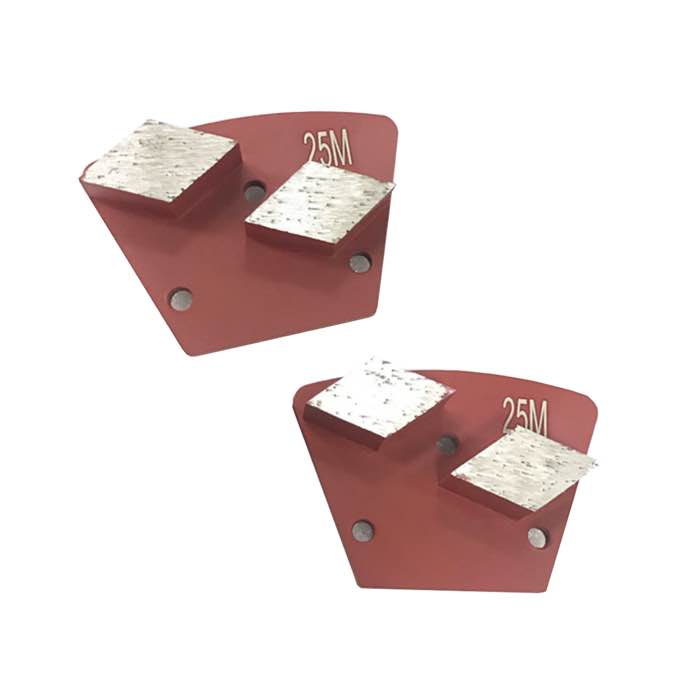
View details
View details
